
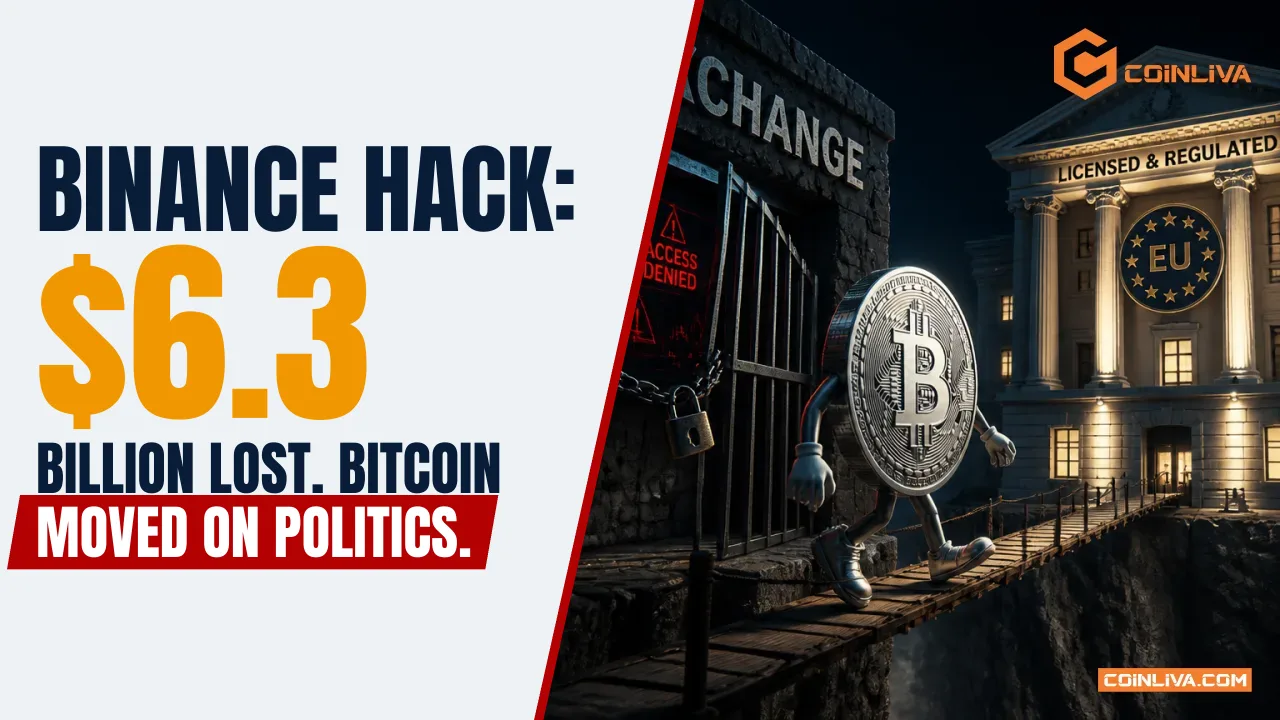
Binance Hack: $6.3 Billion Lost. Bitcoin Moved on Politics.
On October 31, the FBI announced what should have been catastrophic. Binance, the world's largest crypto exchange, lost $6.3 billion. The binance hack was the largest theft in crypto exchange history, attributed to North Korean hackers by law enforcement.
Bitcoin dipped 4 percent.
Four days later it was at $80,500, up from the pre-hack price. Investors who panic-sold did so at the worst possible moment. Everyone else barely noticed. By November 5, new traders were entering long positions.
When the largest hack didn't crash the market
Previous exchange hacks looked different. The 2016 Bitfinex hack triggered a 25 percent crash over weeks. Mt. Gox bankrupted crypto markets for years. Crypto hacks across 2026 totaled $2.7 billion through nine months. But this binance hack, twenty times larger than any prior incident, produced a brief selloff and immediate recovery.
What stopped the crash? Timing did. The binance hack news landed during the U.S. midterm elections on November 3. Markets were watching political results, not blockchain incidents. Pro-crypto Democrats swept key races. Bitcoin rallied on the policy narrative while Binance dealt with its breach in the background.
Professionals and retail diverged sharply
Professional traders told a different story through their wallets. Crypto ETFs recorded $1.8 billion in outflows even as spot prices climbed. Institutions liquidated while retail buyers chased political momentum.
The binance hack had split the market into two responses: retail saw opportunity in political tailwinds, professionals saw execution risk. Chainalysis, the blockchain analytics firm tracking the stolen funds, released a statement promising recovery. Meanwhile the firm itself disclosed being breached by an AI-driven cyberattack just days earlier, exposing user data and investigation tools. Law enforcement's surveillance infrastructure had been compromised while investigating the theft.
Still, Bitcoin climbed.
The crypto industry now operates under assumptions that would have been unthinkable five years ago. Exchange hacks are priced in, stolen funds are recoverable, and political narrative overrides security. Bybit and Crypto.com coordinated fund blocking. Insurance mechanisms existed. Regulatory frameworks, absent in 2016, now governed responses to the binance hack aftermath.
But the splitting of the market, institutions exiting and retail entering on political cues, suggests fragmentation rather than maturity. Professionals are pricing in the risk that hacks will keep happening. Retail is pricing in the hope that politics matters more. These are not compatible positions, and one will resolve into the other.