
On August 13, Bitwise investment chief Matt Hougan gave the market a clean pitch: crypto valuations could at least double as protocols start funding token buybacks out of real revenue. He is right that the money is real. The problem is what those buybacks have done to the tokens they were built to lift. Start with the one he named.
Aave bought its own token near the high
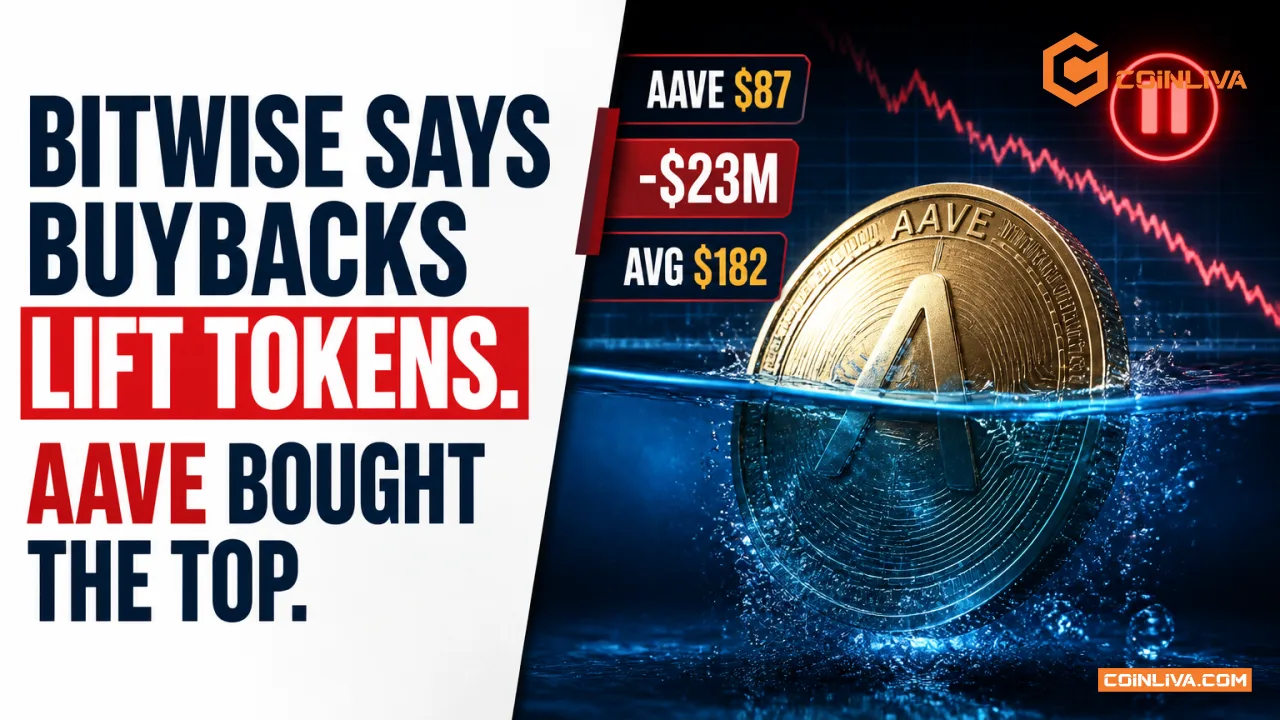
Hougan pointed to Aave, which has spent more than ten months buying AAVE on the open market and has picked up over 205,000 tokens. Research from Castle Labs puts the total spend near $45 million, at an average cost of about $182 a coin. AAVE traded at $87 on August 14. The program is paused, and it sits on a paper loss north of $23 million.
The theory is that a buyback slides a floor under the price. Aave's mostly showed that a protocol treasury can misread a top as badly as any retail trader. And this is not one bad print. It is the pattern across the programs the revenue bulls keep citing.
| Protocol | Buybacks or burns | What the token did |
|---|---|---|
| Aave | About $45M spent, $182 average | AAVE at $87, program paused, over $23M underwater |
| Pump.fun | Roughly $370M of PUMP burned | PUMP down about 60% since launch |
| Hyperliquid | Around $1.3B of HYPE burned | HYPE up roughly 1,400% since launch |
One winner is carrying the whole argument
Hyperliquid is the exhibit every bull reaches for, and the figures are big. The protocol has burned close to $1.3 billion of HYPE since late 2024, and it routes almost all of its fees into buybacks. We checked how clean that plumbing really is, and found the buyback listed at 99% of fees delivered 61%. Even so, HYPE went up. But it went up because the exchange grew, took share, and pulled in traders. The buyback rode that growth rather than creating it.
Where growth stalls, buybacks do not rescue the token. Pump.fun spent roughly $370 million of PUMP and then locked the buybacks in place, and PUMP is still down around 60% from launch. Lido's version is smaller and blunter: the buyback needs $109,000 a day to trigger while the protocol earns $73,450. Across six of the largest fee earners, Castle Labs tallied $7.42 billion in revenue this year. Most of those tokens fell anyway.
None of that makes the revenue fake. Hyperliquid clears more than $800 million a year, and a chain that earns is worth more than a chain that does not. The gap in Hougan's math is the step where earnings become price. Buybacks only help if the market was already close to fair value, so a steady bid tips the balance. When holders are selling into unlocks, emissions, and fresh competition, the treasury just becomes one more buyer catching a falling token, at a worse average than the sellers got.
The Aave DAO still has to vote on whether the permanent $50 million-a-year program restarts after the pause. Watch that decision, and watch whether any of these buybacks can carry a token back above the price its own treasury paid.