
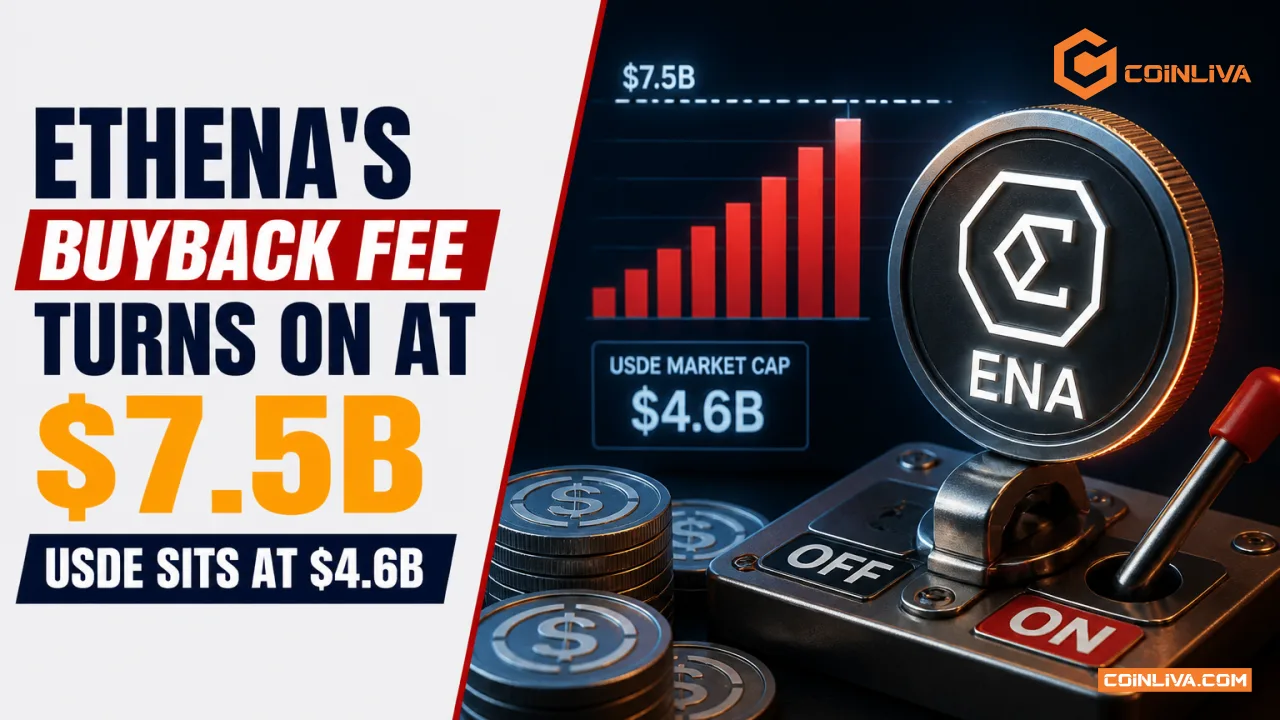
Ethena spent last week doing something few token projects choose to do. It paid some of its earliest investors to walk away, moved to end the monthly venture unlocks that had shadowed ENA for two years, and opened a vote to route almost all protocol revenue into buying its own token. ENA rose on the news, and Ethena framed the package as the end of dilution. The plan reads clean from the top. The fine print on the buyback is where the shape changes.
The buyback everyone cheered comes with a $7.5 billion condition
The headline number is 95 percent. Under the proposed fee switch, 95 percent of net revenue from Ethena's three businesses would go to programmatic ENA purchases, with the remaining 5 percent left for growth. That is the line that carried across the coverage. The condition attached to it carried less far, tucked below the top line.
The switch only turns on once USDe, the synthetic dollar at the center of the model, reaches $7.5 billion in supply. It is not there. USDe sat near $4.6 billion at the time of the proposal, down from a 2025 peak around $15 billion. The buyback the market priced in this week is gated behind a recovery of more than 60 percent in Ethena's flagship product.
| Where USDe stands | Supply |
|---|---|
| 2025 peak | around $15 billion |
| Buyback switch turns on | $7.5 billion |
| Supply at the proposal | around $4.6 billion |
The buyback is a real mechanism, but a conditional one. Its trigger sits well above where the business runs today, so the number the market cheered describes a future state rather than the present one.
Ethena paid its earliest backers to leave, and won't say what it cost
The buyout is the part that moved sentiment. The Ethena Foundation went to founders and seed investors who each held more than 0.25 percent of total supply, singled out the ones who had been selling since the October 2025 peak, and bought their locked tokens through over-the-counter deals. Remaining investor unlocks are set to finish by October 5, closing out the monthly venture release calendar that had been a steady source of supply for a token that spent months absorbing scheduled unlocks.
Take out the seller, take out the overhang. That is the pitch, and for ENA it is a real change in the supply picture.
What the foundation did not put a number on is the price. It has not disclosed which investors sold, how many tokens changed hands, or what Ethena paid to retire them. A protocol spending its own reserves to buy back investor allocations is making a capital decision, and the size of that decision is not public.
Dilution moved rather than vanished
The buyout also left locked supply in place. By The Block's reading, about 12 percent of ENA stays locked and unvested after the changes, held by the team, the foundation, and internal programs rather than outside venture funds. The venture overhang is leaving, but the insider-controlled supply behind it stays, still a real share of a float that one treasury vehicle already crowds.
That distinction matters for anyone pricing Ethena's buyback. A repurchase only bites when the tokens it retires are large against the tokens still coming loose, the same math that governs every unlock against buyback story. The plan starts from an honest place, because ending venture unlocks does thin future supply. It still has to clear its own $7.5 billion gate before the biggest lever switches on, and clearing it depends on USDe growing, not on the vote passing.