
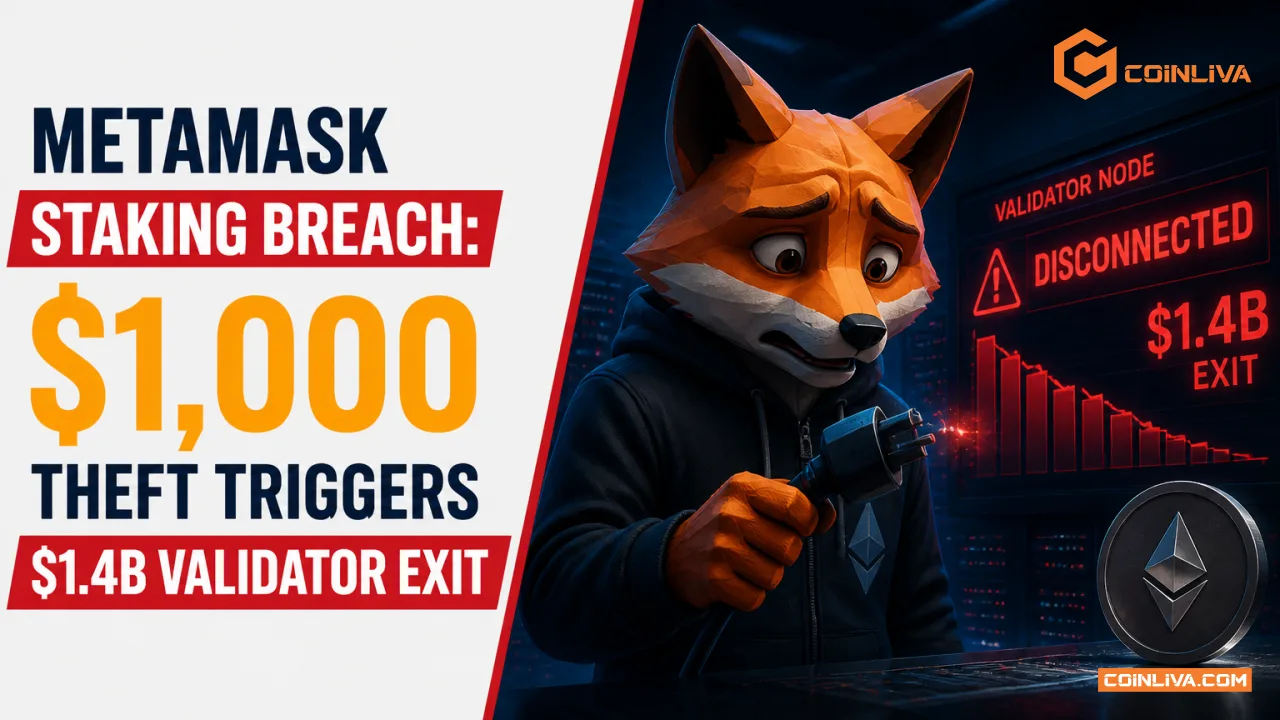
MetaMask began exiting roughly 17,000 Ethereum validators holding approximately 523,000 ETH (worth $1.4 billion at current prices) after an attacker diverted less than $1,000 in block rewards on October 1. The response to the breach dwarfs the actual theft by a ratio of roughly 1.4 million to one.
The incident affected MetaMask staking infrastructure, where an attacker compromised validator credentials and redirected block-production rewards to an unexpected address. The diverted amount totaled approximately 0.36 ETH. Transaction records show the attacker funded their address through Tornado Cash, a privacy mixer often used to obscure transaction origins.
ConsenSys, MetaMask's parent company, confirmed the attack targeted fee payments rather than the underlying staked coins. "At this time, we have identified no immediate threat to MetaMask wallets," the company stated. The withdrawal addresses controlling the staked ETH itself remained separate and untouched throughout the incident.
45-Day Gap Before Validators Return
The exit process began October 1 and expects completion by October 7, when the last affected validators stop producing blocks. However, Ethereum's withdrawal queue means stakers face up to 45 days before their ETH can re-enter the system and resume earning rewards.
Lido Finance, which operated the validators on MetaMask's behalf, announced the exit and confirmed stETH holders need take no action. The liquid staking provider processes roughly 57,600 ETH in validator entries and exits daily. At that rate, the 523,000 ETH withdrawal represents more than nine days of the network's total processing capacity.
Revenue Model Behind the Attack
Validators earn income from two sources: block rewards the protocol issues and transaction fees users pay. The breach redirected the latter while leaving the former (and the 32 ETH stake required per validator) intact. However, validators offline during the exit will miss both revenue streams and face downtime penalties built into Ethereum's staking mechanism.
Lido processes approximately $73,450 in daily revenue across its entire validator network, making the sub-$1,000 theft a fraction of one day's ordinary income. The MetaMask staking operation represents a substantial portion of Lido's infrastructure, handling validator operations for users who stake through the MetaMask interface.
Institutional Custody Under Scrutiny
The timing coincides with new SEC proposals for crypto custody standards, which would require investment advisers to verify client holdings quarterly. The MetaMask staking incident highlights infrastructure vulnerabilities even when user wallets remain technically secure. All 17,000 validators went dark because attackers compromised a credential controlling only fee destinations.
MetaMask has not published technical details of how attackers accessed the credentials or whether additional validators face similar exposure. The MetaMask staking service continues operating for unaffected validators while the company investigates the breach's full scope.